Chalking
Chalky, Faded Panel Paint
Rubbing a hand across the panel leaves white powder behind. The factory finish is breaking down, and acrylic restores a bright surface over it.
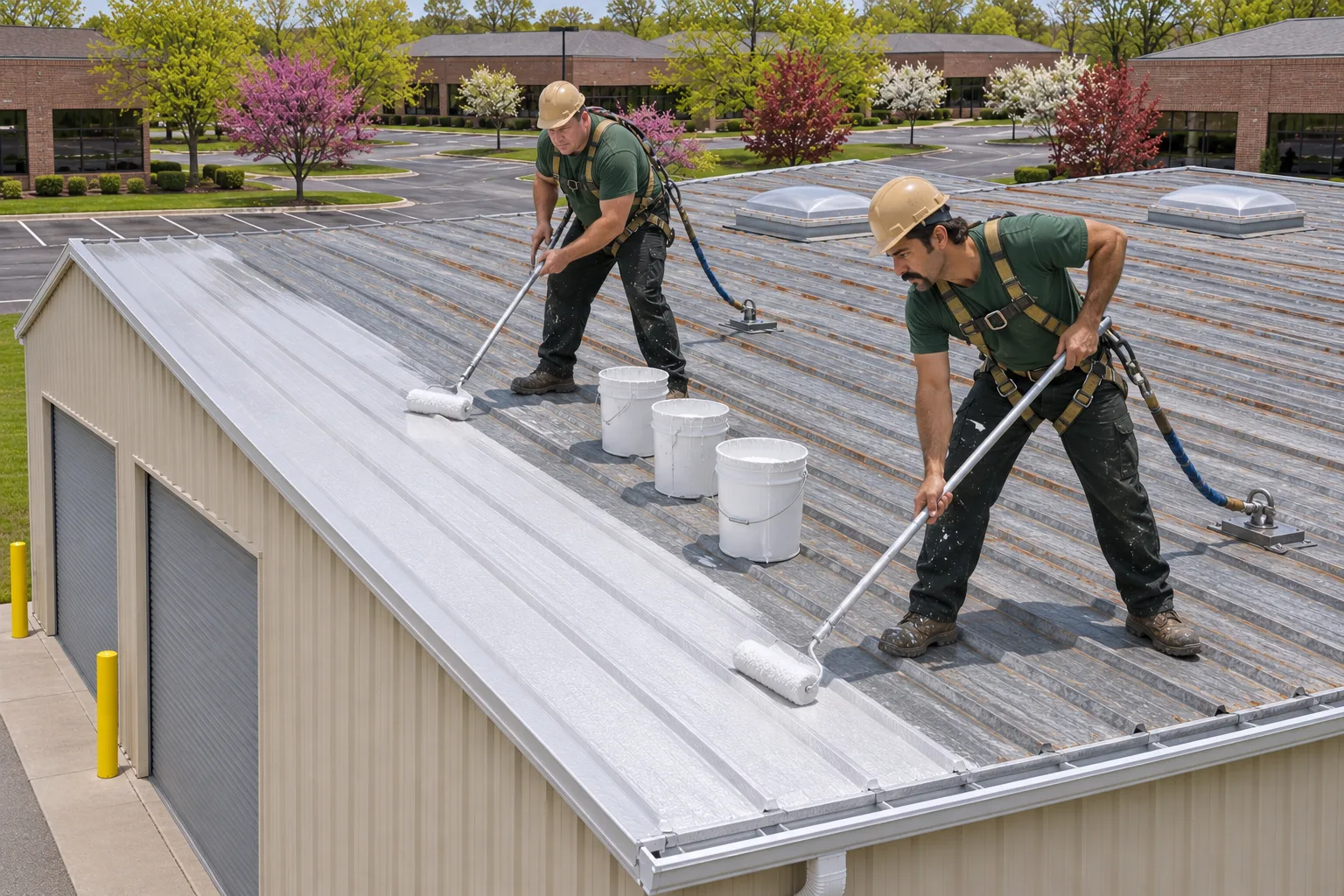
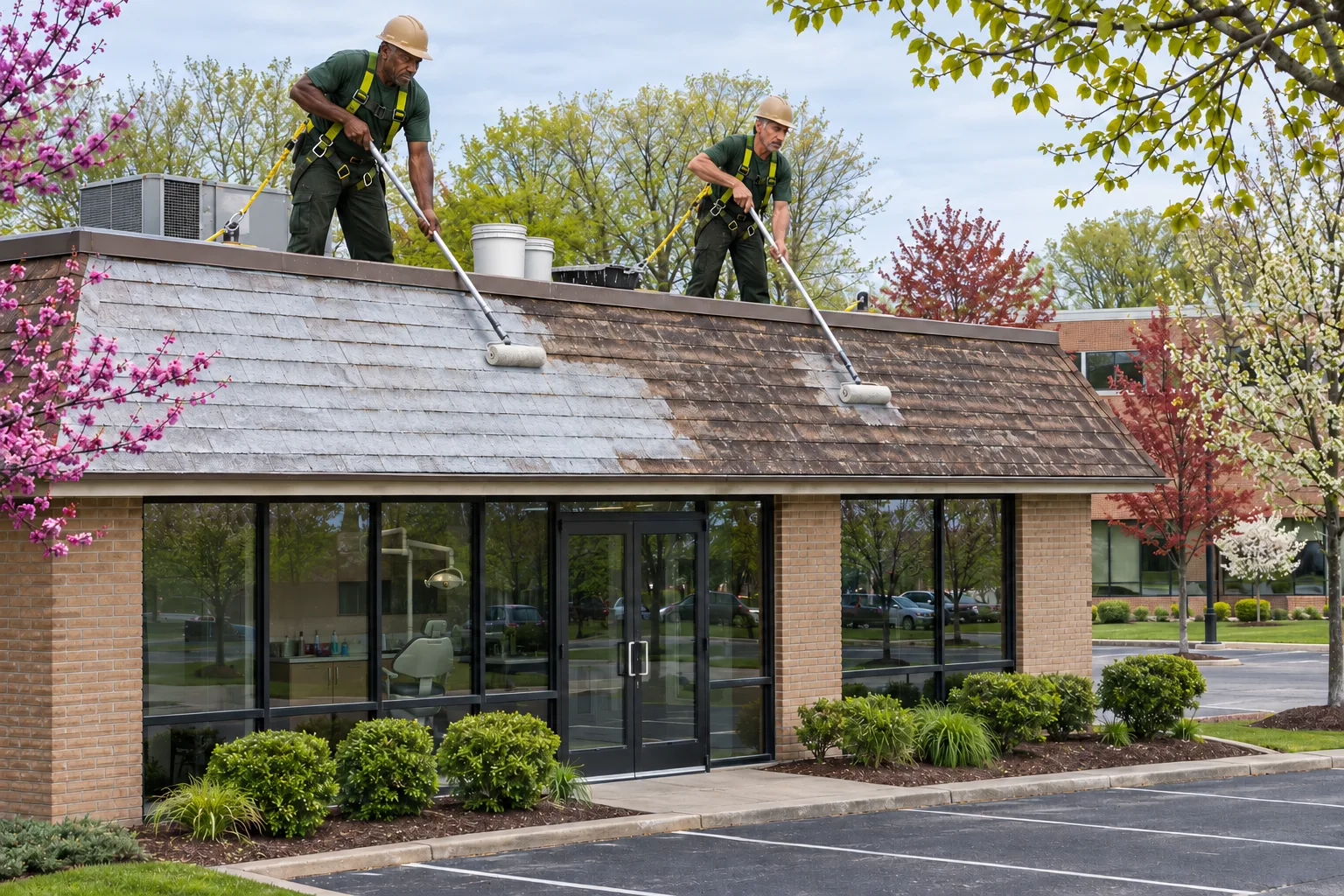
As a Carmel acrylic roof coating contractor, we coat sloped metal roofs that drain well, sealing fasteners and laps first and timing coats around dry, mild weather.
Carmel acrylic roof coating is the raised column. Silicone and panel replacement show where a different path fits better.
Acrylic does its best work on roofs that drain. These conditions point to it, along with the limits we plan around.
Rubbing a hand across the panel leaves white powder behind. The factory finish is breaking down, and acrylic restores a bright surface over it.
Panels expand in the afternoon and shrink at night. Acrylic stays flexible through that movement once screws are sealed and laps reinforced underneath.
Water that sits for more than a day softens acrylic, so flat spots need another approach. It also needs dry, mild weather to cure and more coats than silicone.
Cold nights and heavy dew slow acrylic curing. We schedule coats for stretches of dry weather above freezing and stop when rain is forecast.
Sloped roofs still rust where water sits longest: panel ends, cut edges, and gutters. Those spots get brushed and primed before acrylic goes on.
Skylight curbs on a sloped roof catch water on their uphill side. We reflash them so the acrylic covers a tight joint.
Where acrylic sits among the five systems we install, with the first thing we check for each.
| System | Where It Fits | Check First |
|---|---|---|
| Commercial Metal Roof Coating | Panel roofs with failed screws and open laps | Screw heads and lap tape |
| Silicone Roof Coating | Flat sections that hold water | Ponding depth and duration |
| Acrylic Roof Coating | Sloped, well-drained metal panels | Chalking and cure forecast |
| Spray Foam Roofing | Panel roofs needing added insulation | Moisture in the existing insulation |
| Shingle Roof Coating | Mansards and pitched shingle roofs | Curled tabs and soft decking |
On sloped metal, acrylic's benefits come from flexibility, reflectivity, and how easily it recoats.
Send us the roof size and slope. We will check the metal and price an acrylic coating for the sloped sections.
Acrylic goes on thinner than silicone, so the job is built in layers with checks in between.
We check slope and drainage first, since acrylic needs water to run off. Fasteners, laps, rust, and the condition of the factory finish then get recorded with photos.
Loose screws are replaced and sealed, and laps get fabric and sealer. Flexible acrylic covers panel movement well once these joints are tight.
Chalk and dirt come off with a pressure wash. Bare and rusted metal gets primer so the acrylic has a clean surface to bond to.
Two or more acrylic coats go on, often in contrasting colors so missed spots show. Thickness gets measured after each coat, during dry weather above freezing.
Together we walk the roof, and you receive the coat count, thickness readings, and recoat guidance for your file.
Wet or insulated parts of the same roof can need a different system.
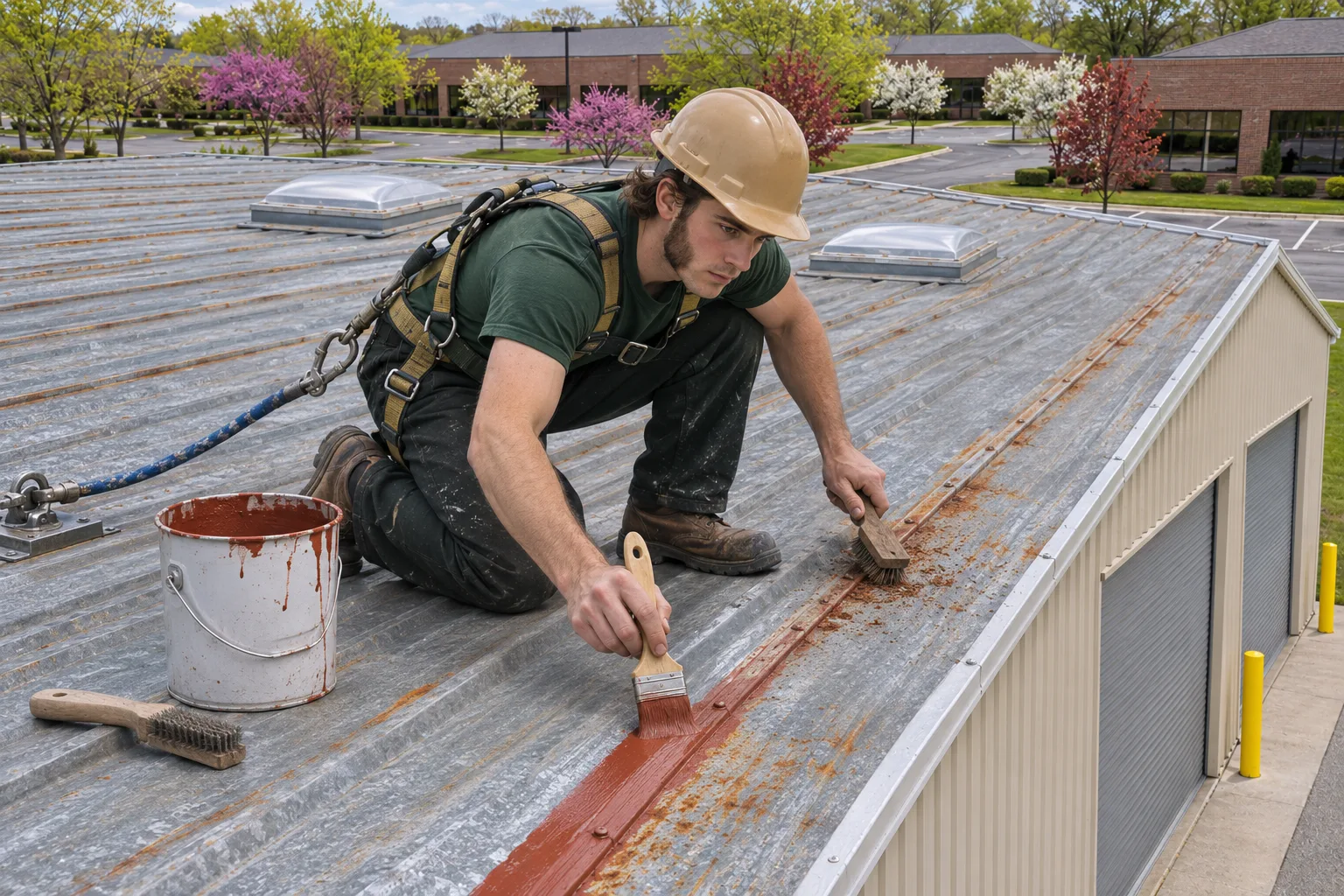
Exposed-fastener roofs that need full fastener and lap work.
Commercial Metal Roof Coating details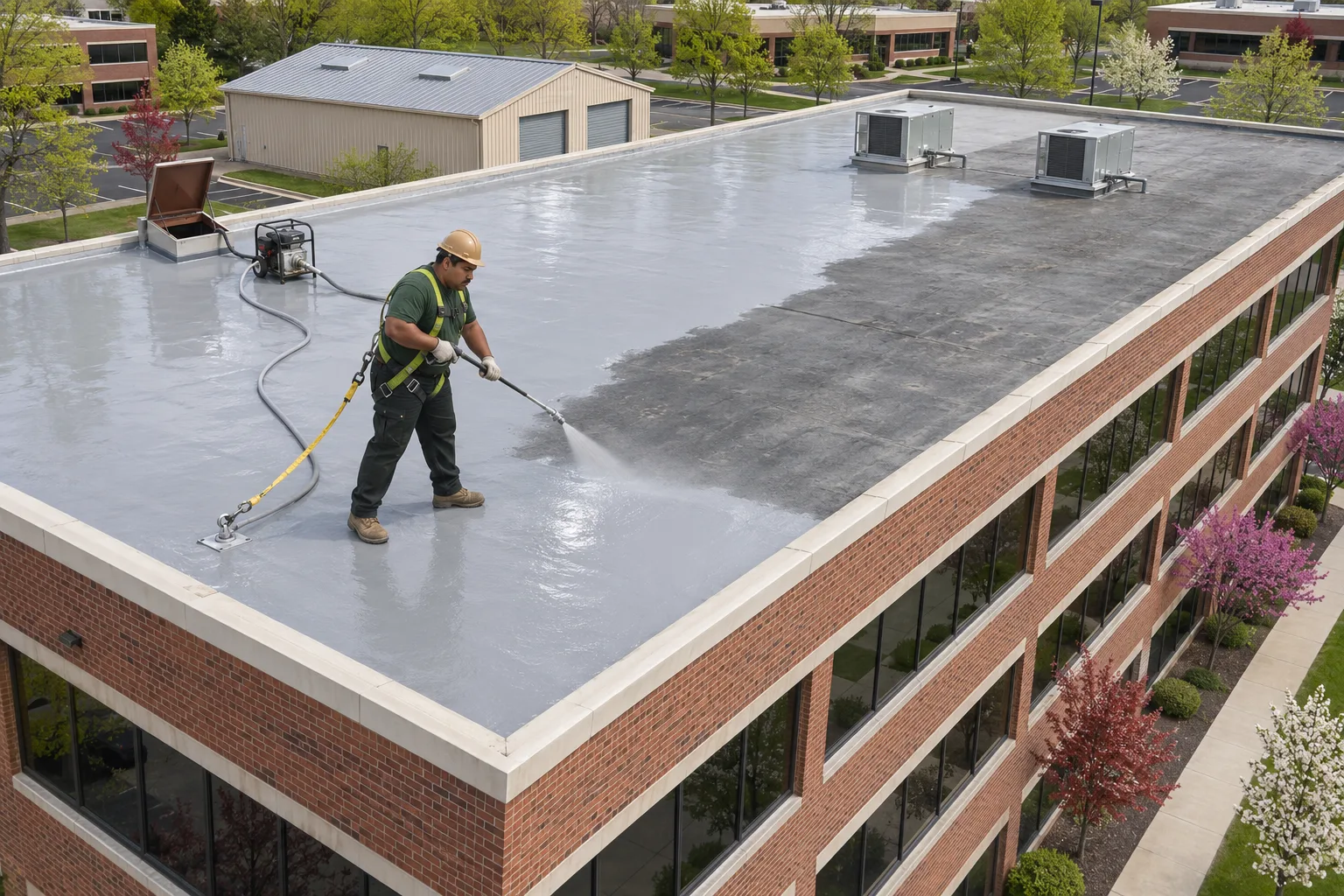
Flat or low sections where water stands after rain.
Silicone Roof Coating details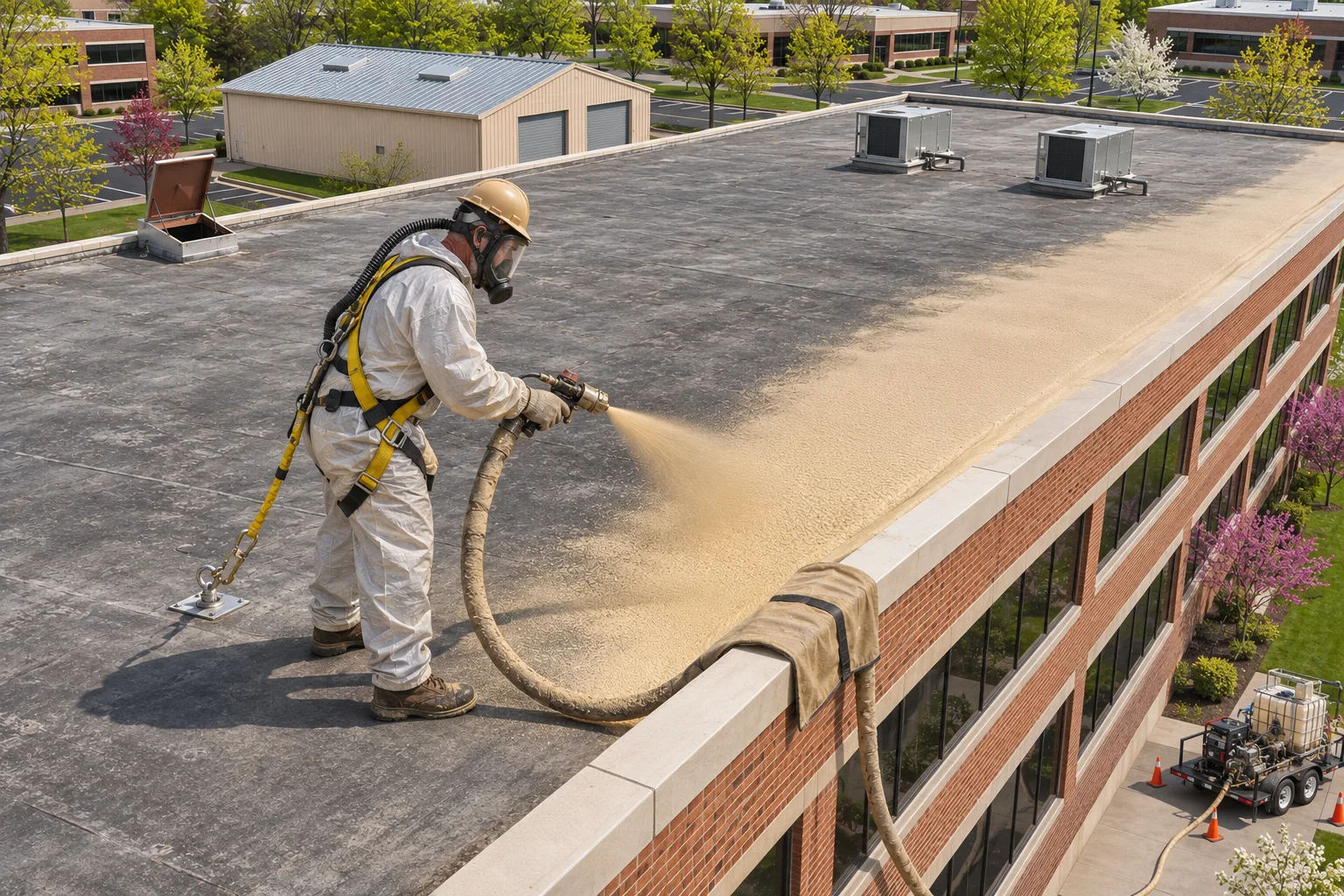
Answers on lifespan, coats, weather, and drawbacks for acrylic on metal.
Film thickness, drainage, and exposure to sun and freeze-thaw cycles decide it.
Sloped panels that drain well give acrylic its longest service, while low spots and heavy foot traffic shorten it. Cleaning the roof and recoating before the film wears thin keep the metal covered.
Most Carmel metal roofs take primer where needed and then two or more acrylic coats to reach the specified thickness. Each acrylic coat is thinner than a silicone coat, so the count runs higher. We measure thickness as we go instead of counting coats alone.
Ponding water softens it, so flat areas need silicone or drainage work. It has to cure before rain or frost, which narrows the season. It also takes more coats than silicone to reach the same thickness.
Yes. Standing seam panels with worn seam sealant and a chalky finish take acrylic well once the seams are resealed and the metal is cleaned and primed.
We schedule acrylic for dry stretches when temperatures stay above freezing overnight, so the film cures before dew or rain. Spring and early fall jobs are planned around the forecast and paused when rain moves in.
Often, once the old coating is cleaned and tested for adhesion. Silicone coatings are the exception: acrylic will not stick to silicone, so a silicone-coated roof stays silicone.
Send the roof size and a few photos of the panels. We will price the prep work and acrylic coats for your Carmel building.