Ponding
Water Standing Near Gutters
Low sections next to gutters and box drains hold water for a day or more after storms. Silicone sits under that water without softening or lifting.

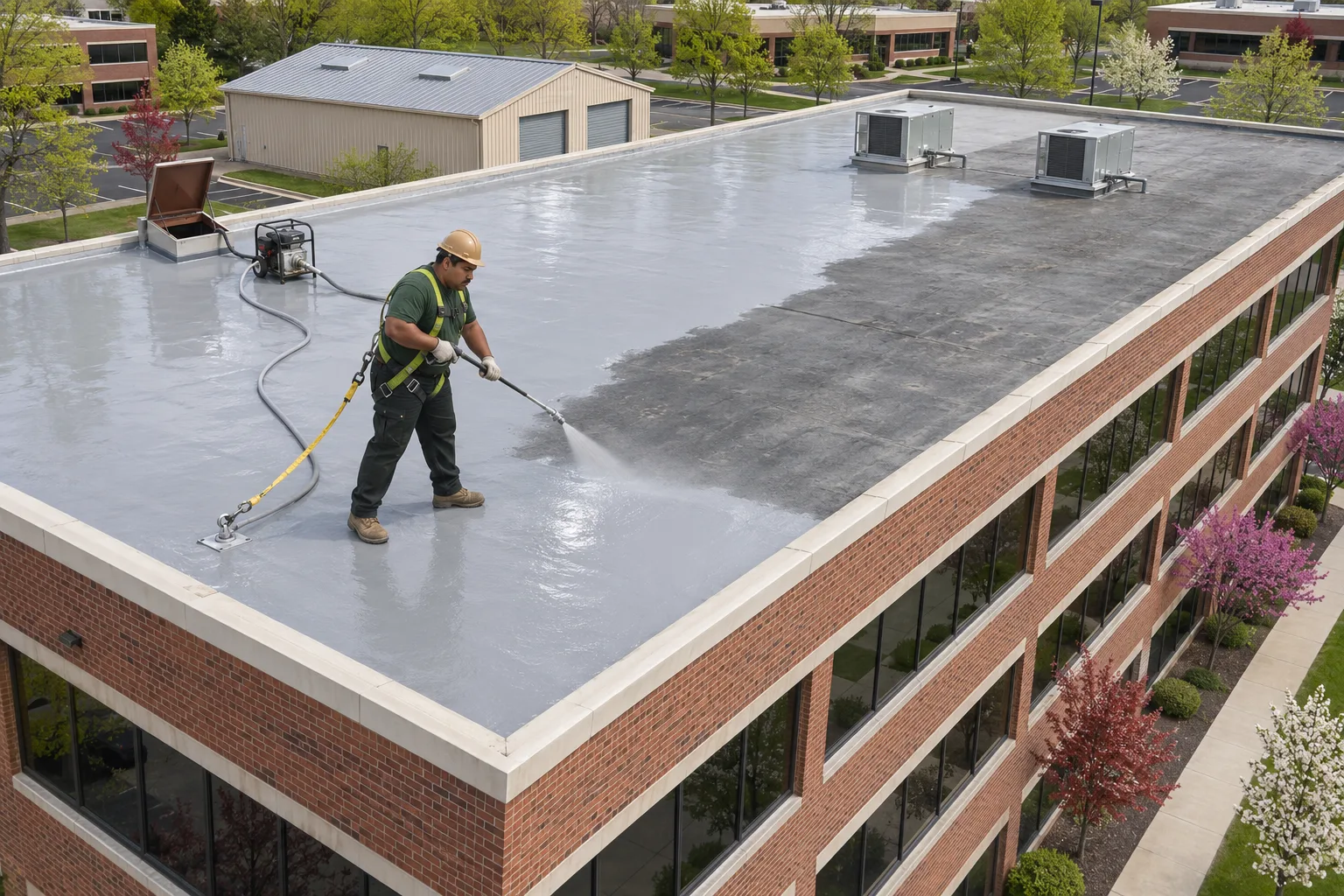
As a Carmel silicone roof coating contractor, we coat low-slope metal and flat roofs where water collects near gutters, curbs, and rooftop units.
Carmel silicone roof coating sits in the raised column. The other two columns show when acrylic or drainage work comes first.
Silicone earns its place on the parts of a roof that stay wet. These are the conditions we look for.
Low sections next to gutters and box drains hold water for a day or more after storms. Silicone sits under that water without softening or lifting.
Rooftop unit curbs dam water on their uphill side. Sealant around the curb breaks down first, and the coating has to bridge that joint.
Flat roofs on Carmel office buildings take full sun all afternoon in July. Silicone keeps its flexibility and color under that exposure.
Dirt sticks to silicone and dulls its reflectivity, it turns slick when wet, and only silicone bonds to it for later recoats. We plan walkway pads and recoat material with that in mind.
Debris collects at box drains and scupper openings and holds water back. Clearing them before coating keeps ponding from spreading.
Interior stains under a low section usually mean water has found a seam or fastener there. Cores tell us whether the insulation needs replacing first.
How silicone compares with the other four systems we install, and what we check first on each.
| System | Where It Fits | Check First |
|---|---|---|
| Commercial Metal Roof Coating | Panel roofs leaking at screws and laps | Fastener count and lap condition |
| Silicone Roof Coating | Flat and low-slope sections that pond | Drain flow and wet insulation |
| Acrylic Roof Coating | Sloped roofs with quick runoff | Slope and the cure forecast |
| Spray Foam Roofing | Roofs that need insulation and slope | Cores showing dry insulation |
| Shingle Roof Coating | Pitched shingle sections and mansards | Granule loss and deck firmness |
Silicone's benefits show up most on the parts of the roof that stay wet longest.
Send us photos of where it collects. We will check the drainage and price silicone for the low sections.
Silicone needs a clean, dry surface, so preparation takes most of the schedule.
We map where water stands, core suspect areas for wet insulation, and check drains, curbs, and seams. Silicone goes only where the roof underneath is dry.
Clogged drains get cleared, wet insulation gets cut out and replaced, and damaged seams get repaired so the coating covers a dry, solid roof.
The surface is pressure washed and left to dry. Primer goes on where the product data calls for it, such as over rusted metal or aged membrane.
One or two passes build the specified dry film thickness. Wet film readings are taken across each section, and thin spots get another pass.
Pads go down along the paths to rooftop units, since wet silicone is slick. You get thickness records and photos for the file.
Steeper or insulated sections of the same building may suit another system.
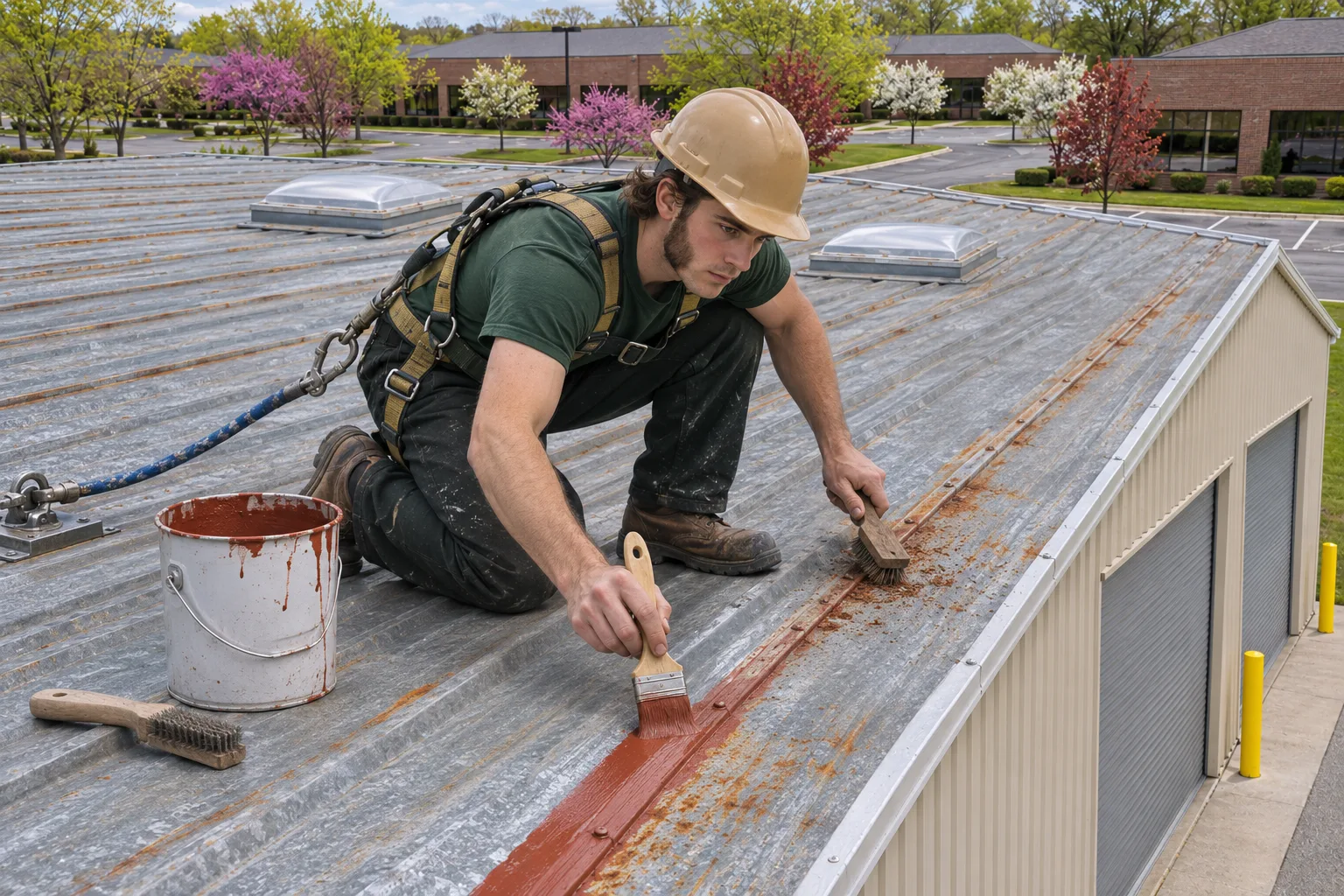
Sloped panel areas that need fastener and lap work.
Commercial Metal Roof Coating details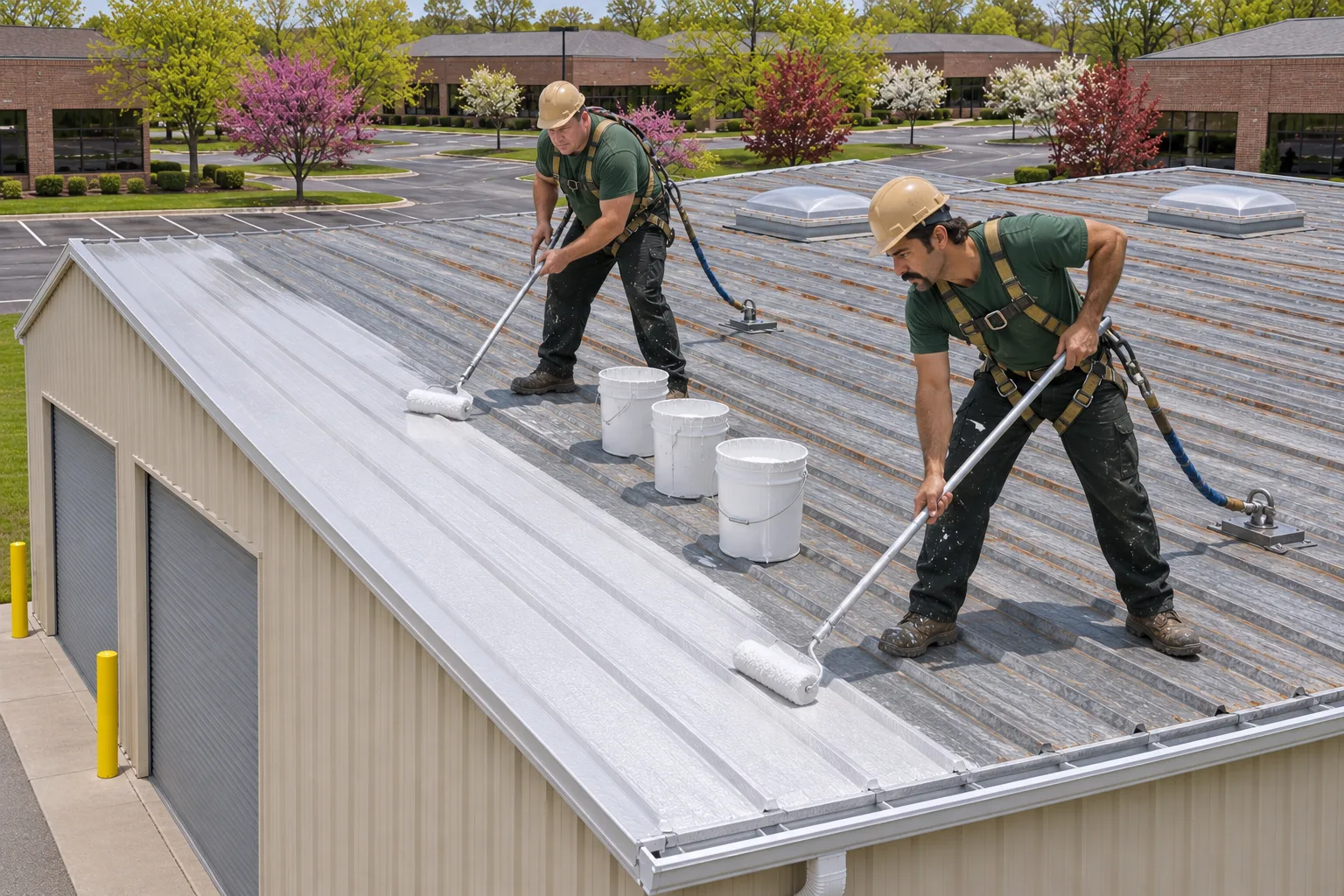
Well-drained slopes where acrylic recoats more easily.
Acrylic Roof Coating details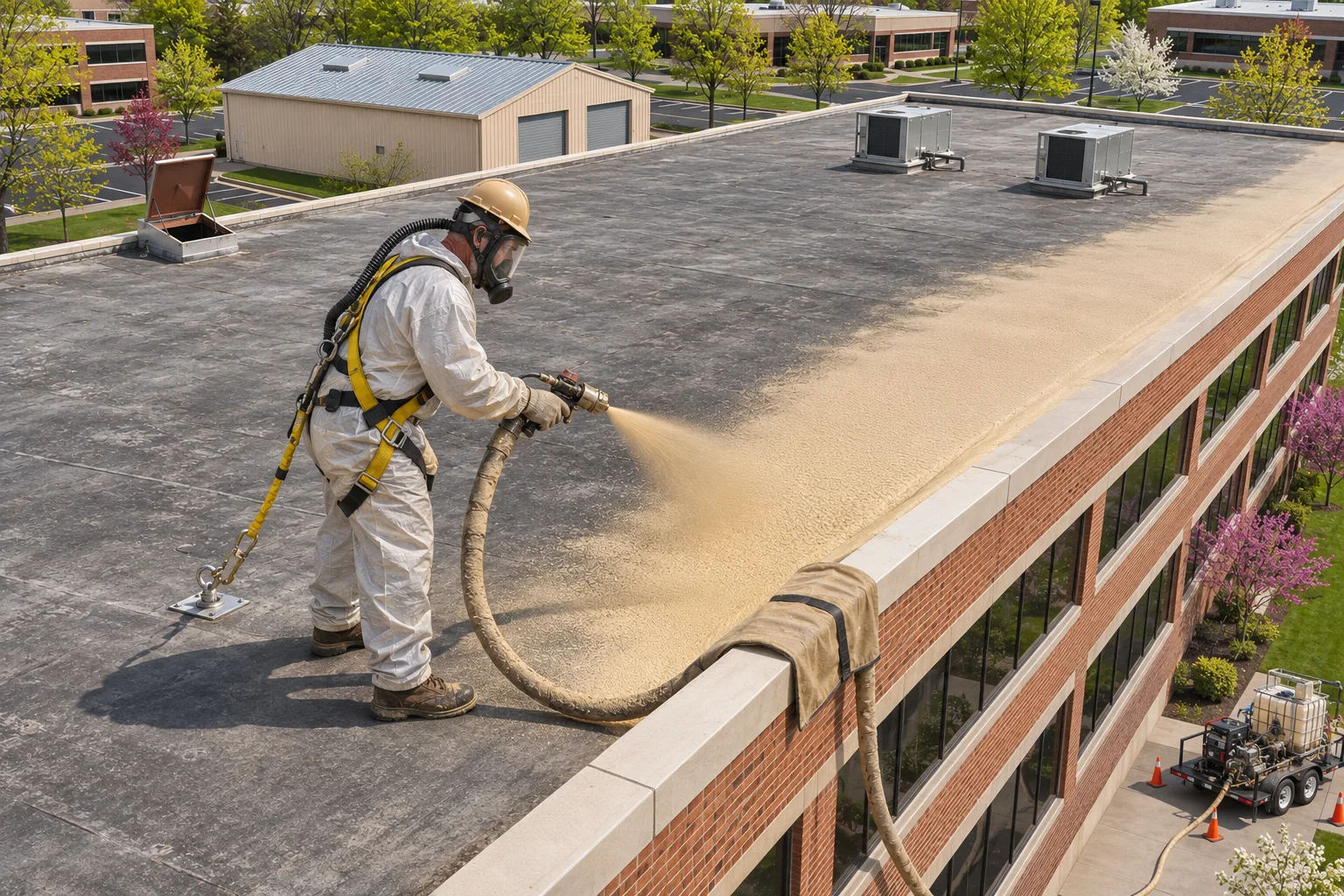
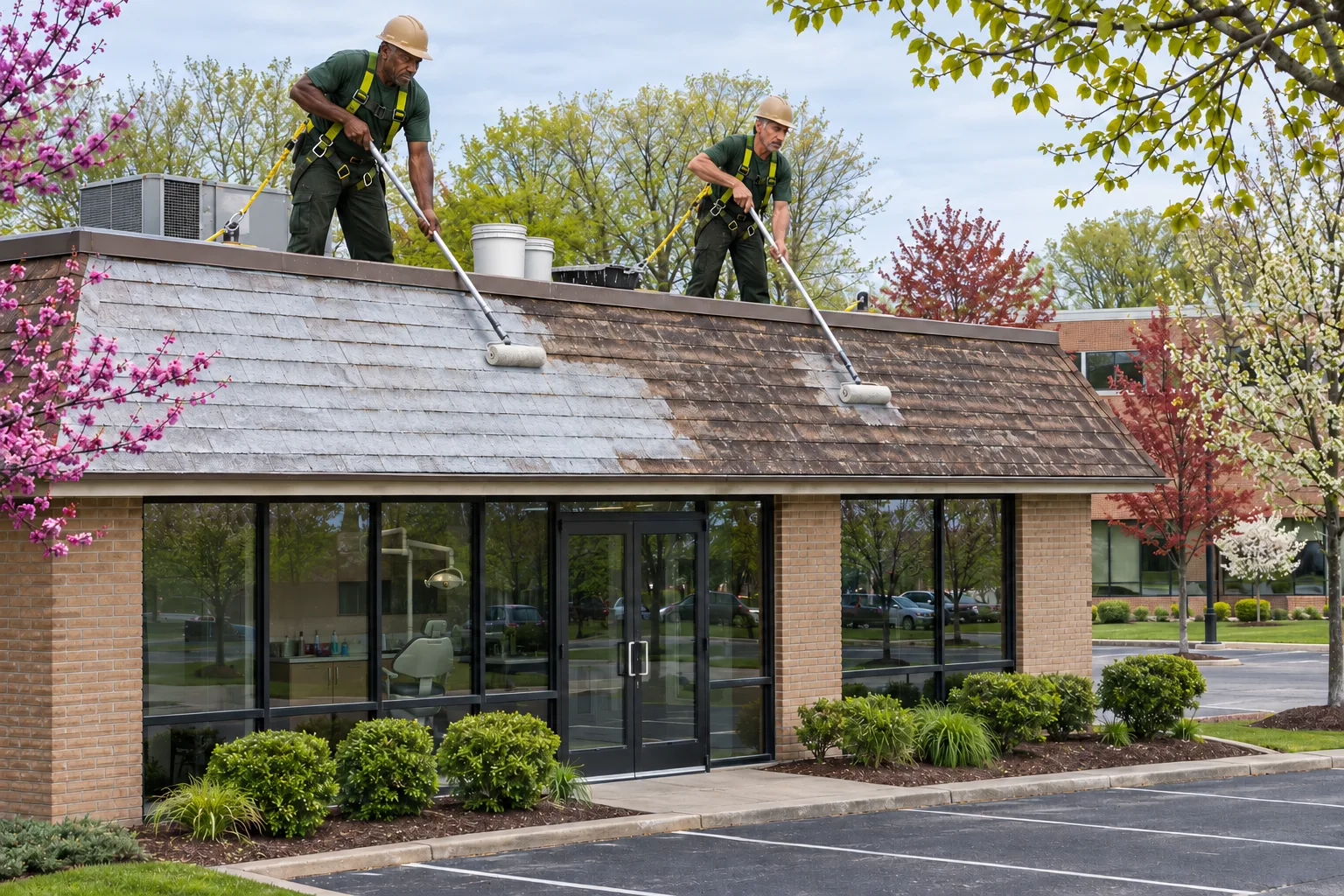
What owners ask before choosing silicone for a low-slope roof.
Silicone wins where water ponds near gutters and curbs, because it tolerates standing water.
Acrylic wins on steeper metal roofs that drain fast and need easy recoats. Silicone tends to reach thickness in fewer coats, while acrylic costs less per gallon, so drainage and your recoat plans settle the choice.
It collects dirt, which dulls reflectivity over time, and only silicone sticks to it when the roof is recoated. It is slippery when wet, so walkway pads go near rooftop units. Per gallon it costs more than acrylic, though needing fewer coats can offset that.
Usually primer where the metal needs it, reinforced seams and fasteners, then one or two silicone coats. The specified dry film thickness sets the count, and wet film readings show where a second pass is needed.
Its life follows applied thickness, preparation, and how often tenants' HVAC technicians walk the roof. Silicone handles standing water and sunlight well. Cleaning the surface, fixing punctures right away, and recoating once the film wears thin keep it working.
Yes. Silicone is the system we use where water stands near drains and curbs. Those areas have to be dry while we apply it, wet insulation underneath is replaced first, and a badly sagging deck gets drainage repairs before coating.
On a low-slope roof it is rarely visible from the parking lot. Up close, it gives a bright, even surface over the old metal or membrane.
Show us where the water sits. We will price the drain repairs and silicone coating for the low sections.