Fasteners
Coating Exposed-Fastener Metal Roofs
Every screw on an exposed-fastener roof gets checked by hand. Stripped holes take an oversized screw, and each head is sealed or capped so water has no path in.
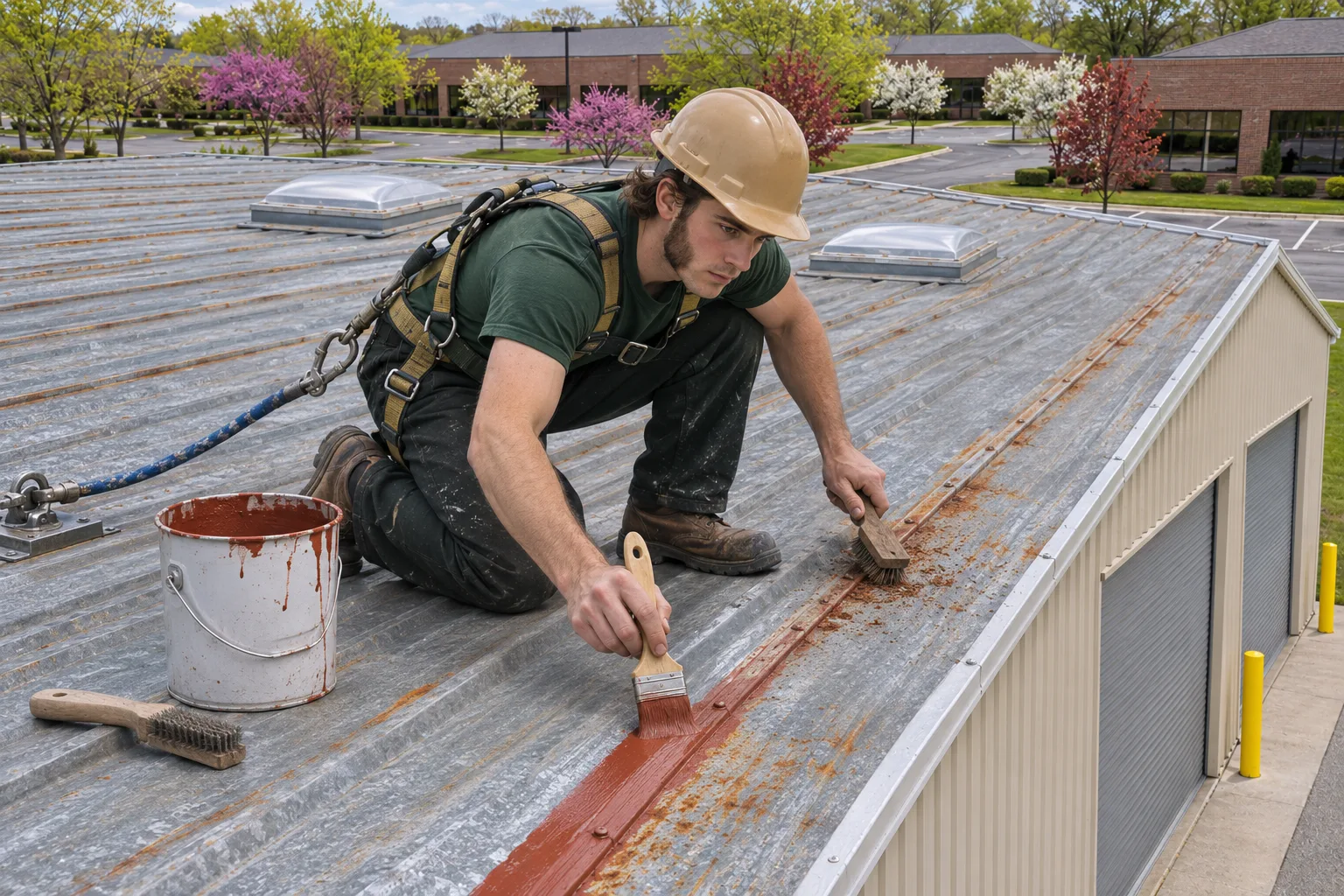
As a Carmel commercial metal roof coating contractor, we replace failed screws, reinforce laps, prime rust, and coat exposed-fastener and standing seam roofs in measured passes.
Carmel commercial metal roof coating is the raised column below. Compare it with the two other paths an aging panel roof can take.
Four details decide how long the coating lasts on a panel roof. We fix them before primer goes down.
Every screw on an exposed-fastener roof gets checked by hand. Stripped holes take an oversized screw, and each head is sealed or capped so water has no path in.
Loose scale comes off with wire brushes and a pressure wash. Remaining rust gets a primer matched to the coating, and any panel with a hole is replaced.
Panel laps open as the roof moves through hot days and cold nights. Fabric embedded in sealer bridges each lap so the coating has a solid surface to cover.
Curbs around skylights and rooftop units leak where the flashing has pulled away. We reseal that flashing and build the coating up the curb sides.
Low-slope panel roofs can hold water at end laps where sheets overlap. We seal those laps first and pick a coating that handles the wet spots.
Rust eats gutters and eave trim from the inside out, and gutter seams open over doors. We seal or replace sections before coating the roof edge.
All five systems we install, with what we check first on each when the building has a metal roof.
| System | Where It Fits | Check First |
|---|---|---|
| Commercial Metal Roof Coating | Exposed-fastener and standing seam panel roofs | Every screw, lap, and rusted edge |
| Silicone Roof Coating | Low-slope panels with water near gutters | Where water stands after rain |
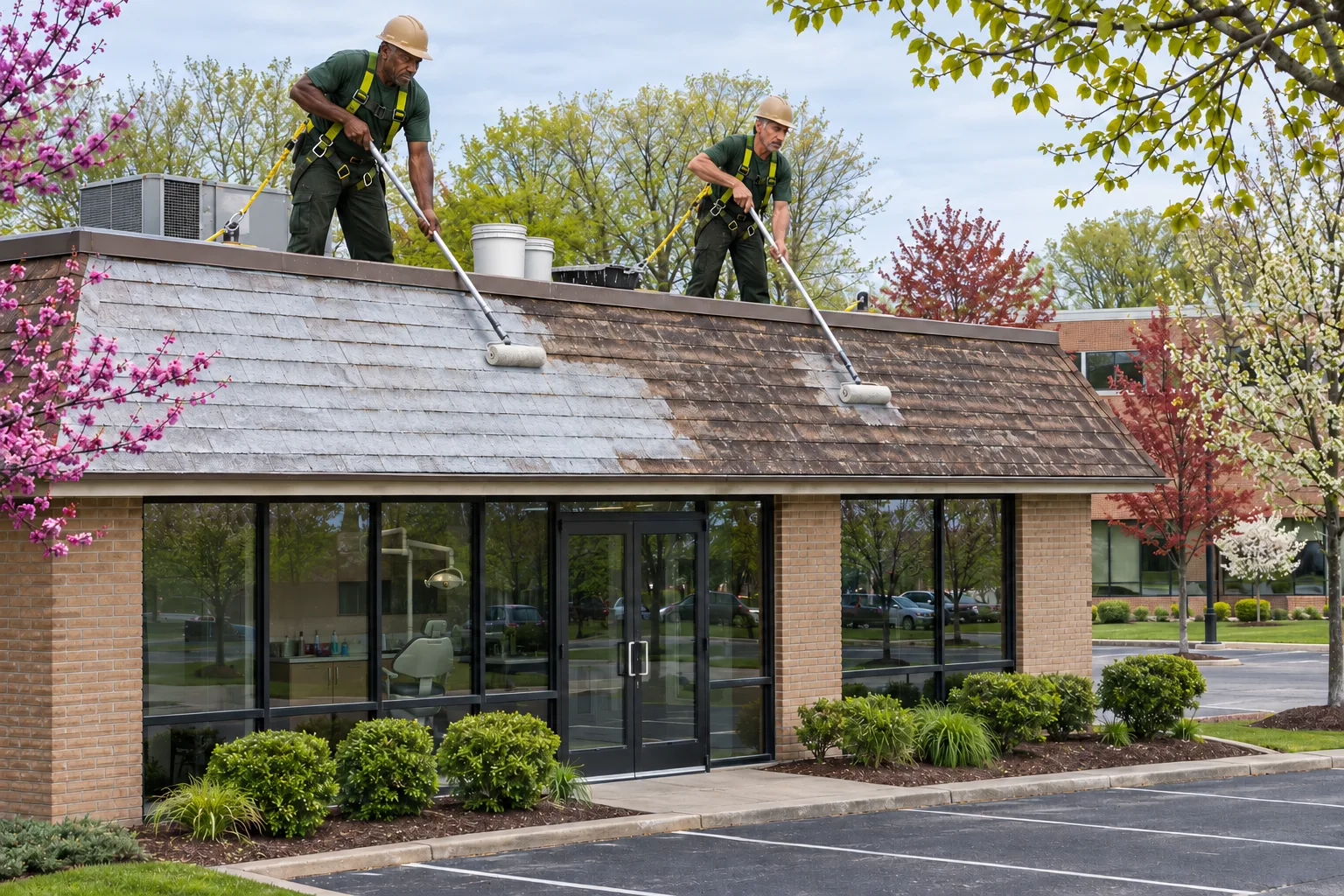
| Acrylic Roof Coating | Sloped panels that shed water fast | A dry, mild stretch of weather |
| Spray Foam Roofing | Panel roofs that need insulation on top | Dry panels and dry insulation |
| Shingle Roof Coating | Shingled mansards on mixed-roof buildings | Flat shingles over a firm deck |
On a metal roof, the benefits come from the repairs under the coating as much as from the coating itself.
Tell us roughly how big the roof is and where the leaks show up inside. We will price the fastener work and the coating in one scope.
A metal roof job follows the same order every time, and the first step decides the rest.
We check screws, laps, ridge caps, gutters, and skylights, then core the roof wherever the insulation could be wet. The inspection report lists every repair with a photo.
Backed-out and stripped screws come out, oversized screws with new washers go in, and every head is sealed or capped so the coating covers a tight surface.
Fabric goes into a bed of sealer across end laps, side seams, and flashing joints. Most metal roof leaks start at these joints, so they get the most attention.
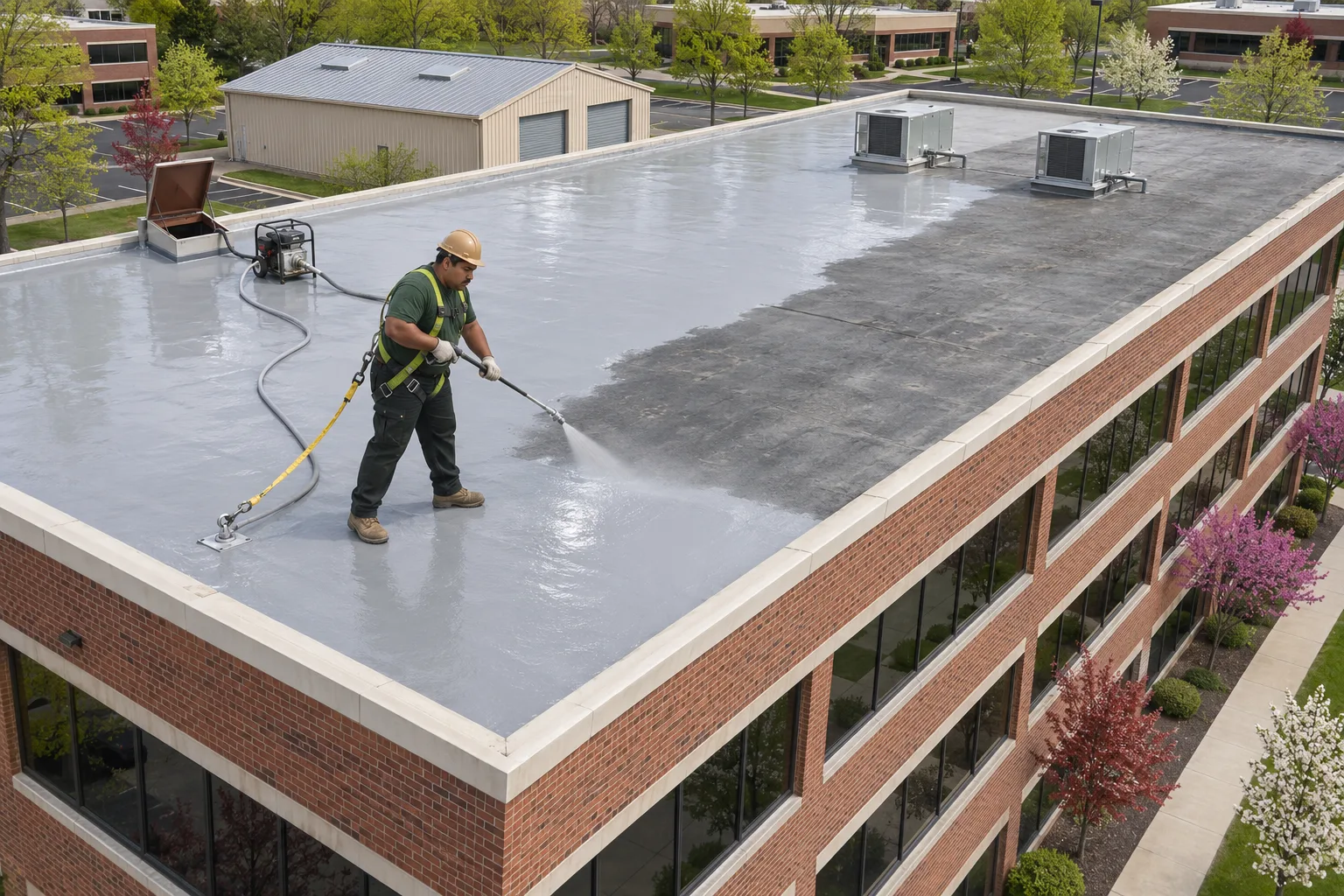
A pressure wash removes chalk and dirt, rust gets primer, and the coating goes on in measured passes until each section reaches its specified thickness.
You receive the products used, thickness readings by roof section, and photos of the finished details, so the next recoat starts from known numbers.
Some sections of a metal building call for a different system.
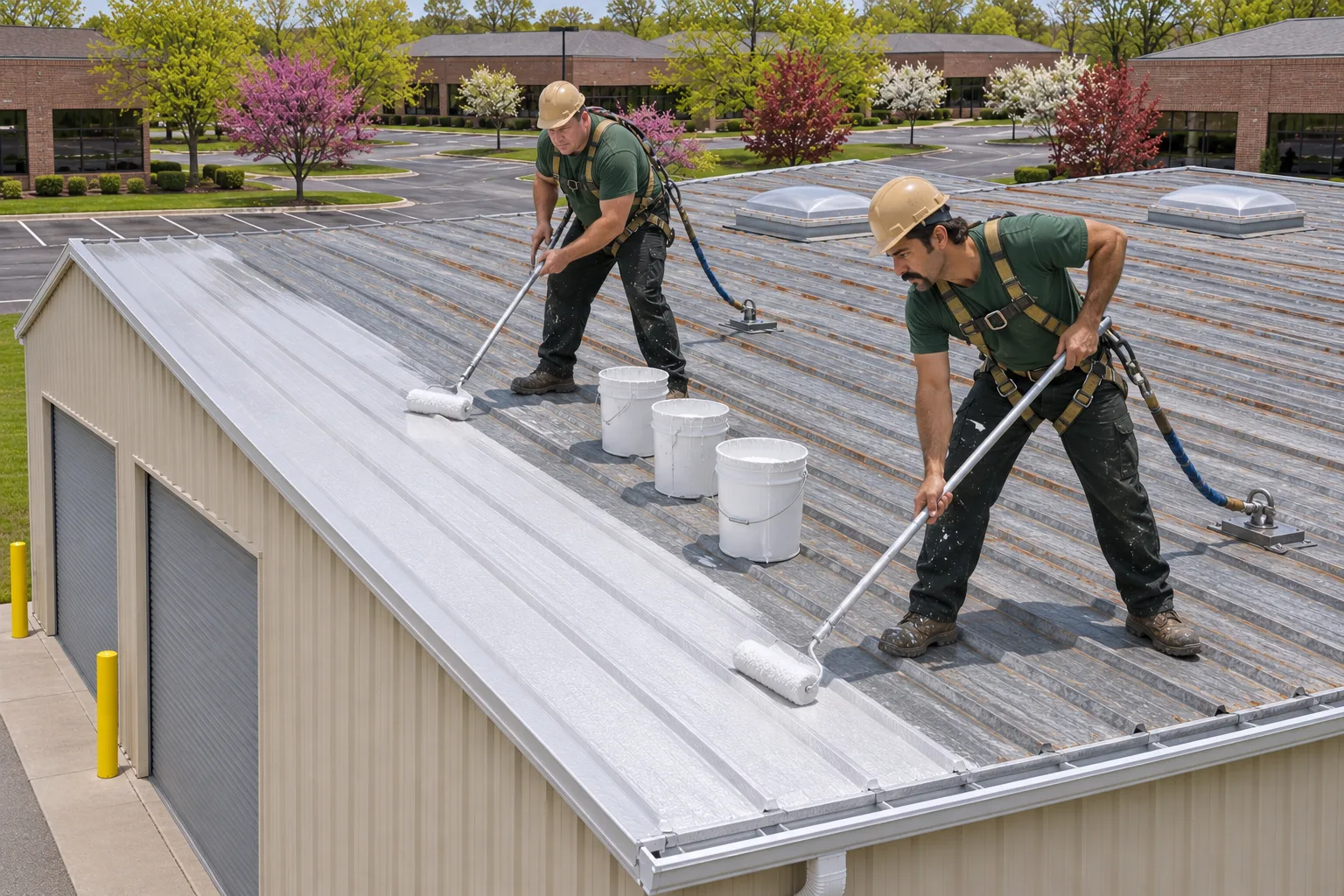
Steep, well-drained panels where easy recoats matter.
Acrylic Roof Coating details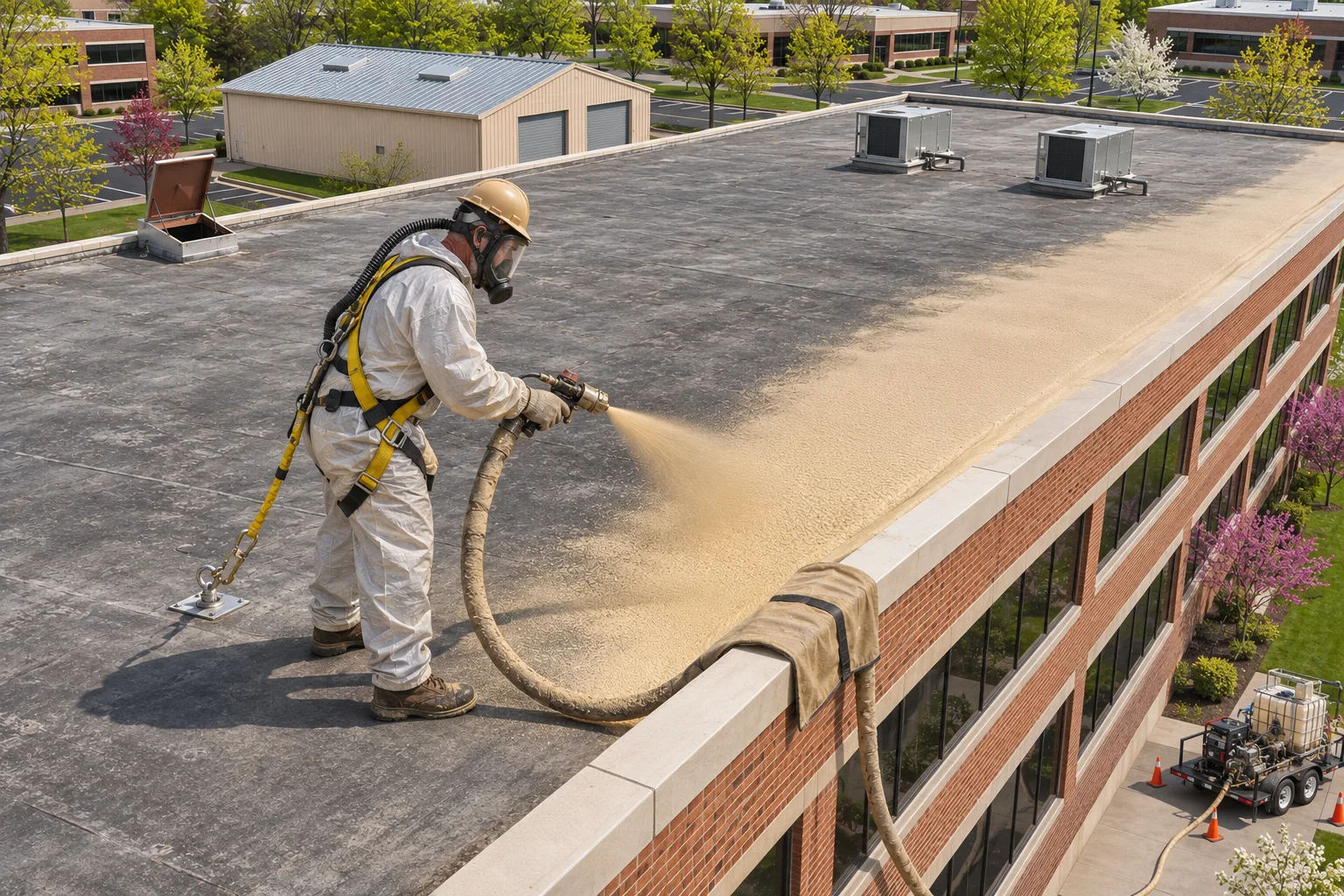
Plain answers on price, preparation, and coating choice for commercial panel roofs.
Expect a figure inside our published coating range of about $2.50 to $4.00 per square foot, set once we inspect the roof.
Rust treatment, the number of screws to replace, lap reinforcement, rooftop equipment, and access around landscaped grounds and parking all move the price within that range.
Restoration repairs and coats the existing roof in place. We clean, treat rust, replace fasteners, and seal seams and curbs before the coating goes on. With no tear-off, the clinic keeps seeing patients, and work is staged away from patient parking and entrances.
Slope, drainage, and condition decide it. Silicone suits sections where water sits; acrylic suits well-drained slopes and recoats easily; spray foam with a topcoat suits roofs that need insulation or one continuous layer over many seams. We name the system after the inspection.
Each screw gets checked. Stripped or loose ones are replaced with oversized screws, every head is sealed or capped, and laps get fabric and sealer. Only then do primer and coating go on across the whole roof.
Dirt, chalk, and loose rust come off first. Remaining rust gets a primer made for the coating system, badly rusted screws are swapped, and any panel with a hole is patched or replaced. A coating holds only as well as the metal under it.
Tell us the roof size and where it leaks. We will inspect it and price the fastener, lap, and coating work together.