Laps
Will Spray Foam Stop Leaks in a Metal Roof?
Sprayed foam adheres across laps, seams, and screw heads as one layer, closing the gaps that leak. Loose panels and damaged fasteners are fixed first, and the roof must be dry.

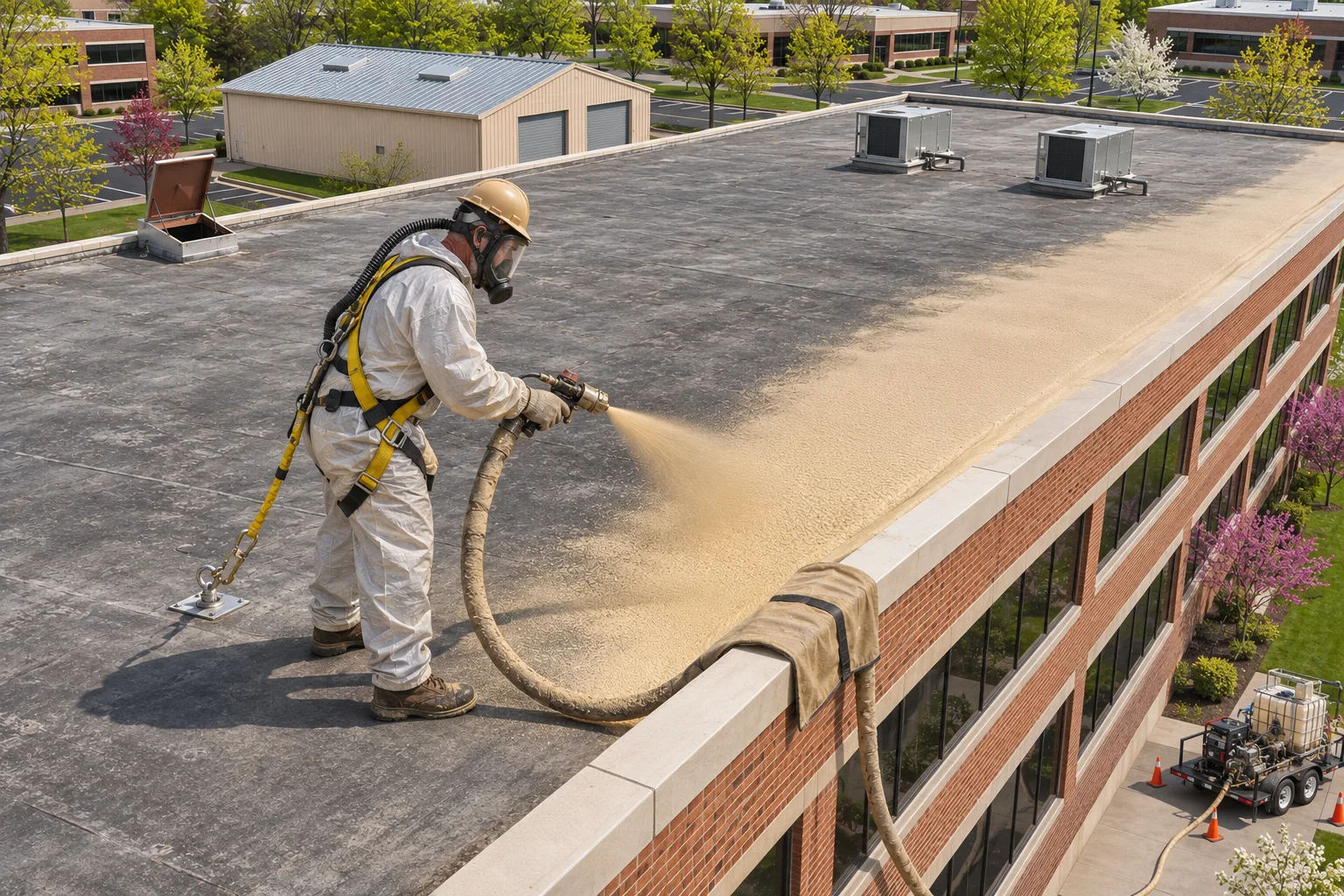
As a Carmel spray foam roofing contractor, we spray foam over dry, tightly fastened metal and flat roofs, then topcoat it so the foam stays shielded from sun.
Carmel spray foam roofing is the raised column. Coating alone or a tear-off fits better when the roof falls into the other two.
Foam answers a short list of problems well. Here is what we look for when foam is on the table.
Sprayed foam adheres across laps, seams, and screw heads as one layer, closing the gaps that leak. Loose panels and damaged fasteners are fixed first, and the roof must be dry.
Older metal buildings around Carmel often have little insulation under the panels. Foam adds insulating value on top without opening the building.
Foam goes on thicker in some areas and thinner in others, so it builds slope that moves water toward drains and scuppers.
Wind carries foam particles, so we set up screens, cover rooftop units and intakes, and plan parking around the work area before spraying starts.
Insulation that soaked up water from old leaks must come out before foam goes down, since foam sealed over moisture traps it.
Hail dents panels and punctures old coatings. Foam fills the dents, and its topcoat gets inspected after major storms.
Foam is one of five systems we install. This is where each one fits and the first thing we check.
| System | Where It Fits | Check First |
|---|---|---|
| Commercial Metal Roof Coating | Panel roofs that only need sealing | Fastener and lap condition |
| Silicone Roof Coating | Ponding sections and foam topcoats | Drain flow before coating |
| Acrylic Roof Coating | Sloped metal that drains fast | Weather for curing |
| Spray Foam Roofing | Roofs needing insulation and slope | Moisture cores and panel fastening |
| Shingle Roof Coating | Shingle mansards near the foam roof | Shingle condition and flashing |
Foam's benefits come from what it adds on top of the roof: one continuous surface and a layer of insulation.
Tell us the roof size and what sits under the panels now. We will check for moisture and price foam with a topcoat.
Foam work depends on dry weather and a dry roof, so the schedule is built around both.
We core the roof to confirm the insulation is dry and check every panel and fastener. Foam needs a dry, tight surface, so this inspection decides whether foam fits.
Loose panels get fastened, damaged screws get replaced, and the roof is cleaned of dirt and rust scale so the foam bonds.
Rooftop units, air intakes, and nearby cars get covered, and wind screens go up. Spraying stops when the wind picks up.
Foam goes on in passes to the specified thickness, built up where extra slope toward drains is needed.
A protective coating goes over the foam soon after spraying, because sunlight breaks down exposed foam. Thickness is measured before we leave.
Roofs that need no insulation often do better with coating alone.
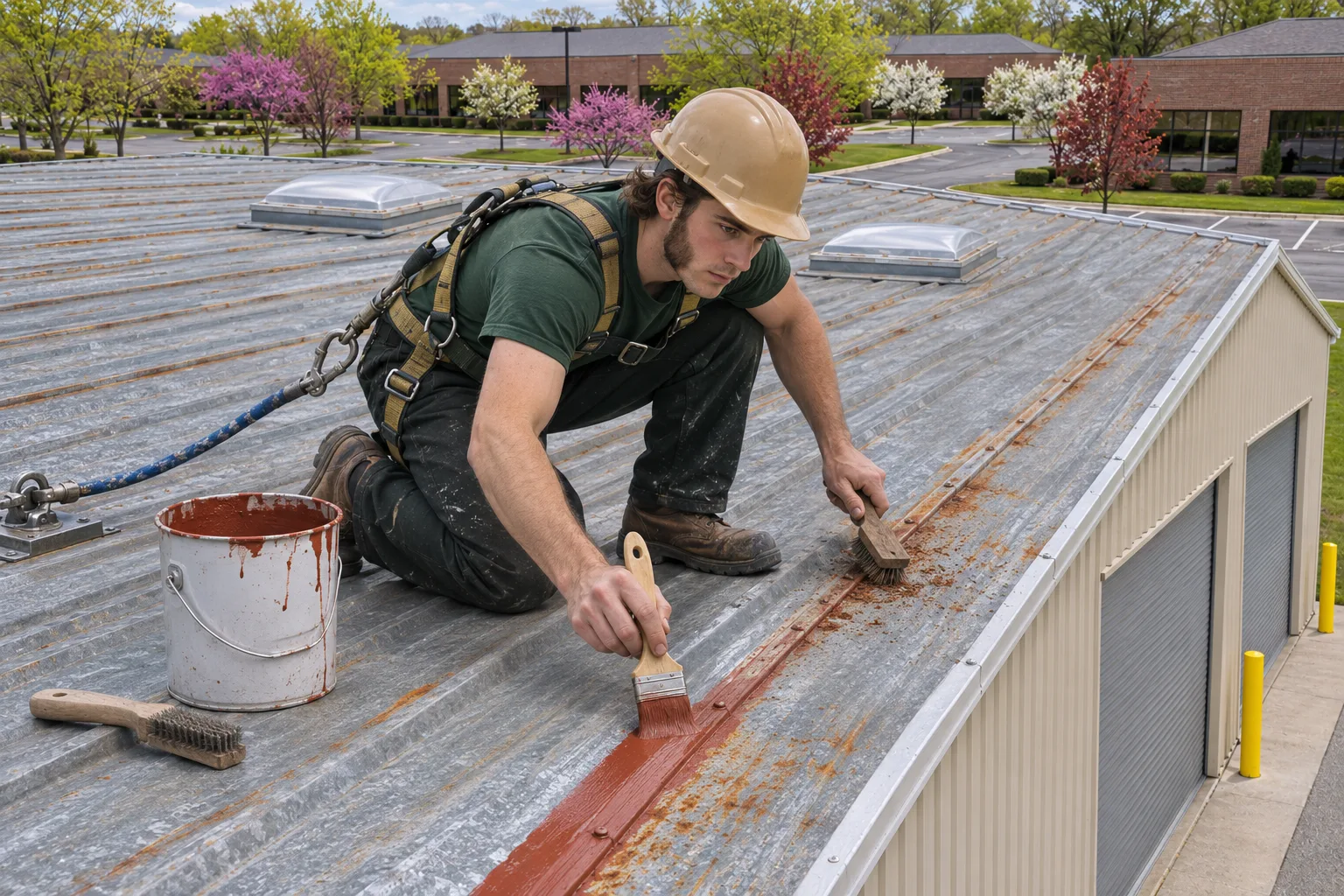
Panel roofs that need sealing but no added insulation.
Commercial Metal Roof Coating details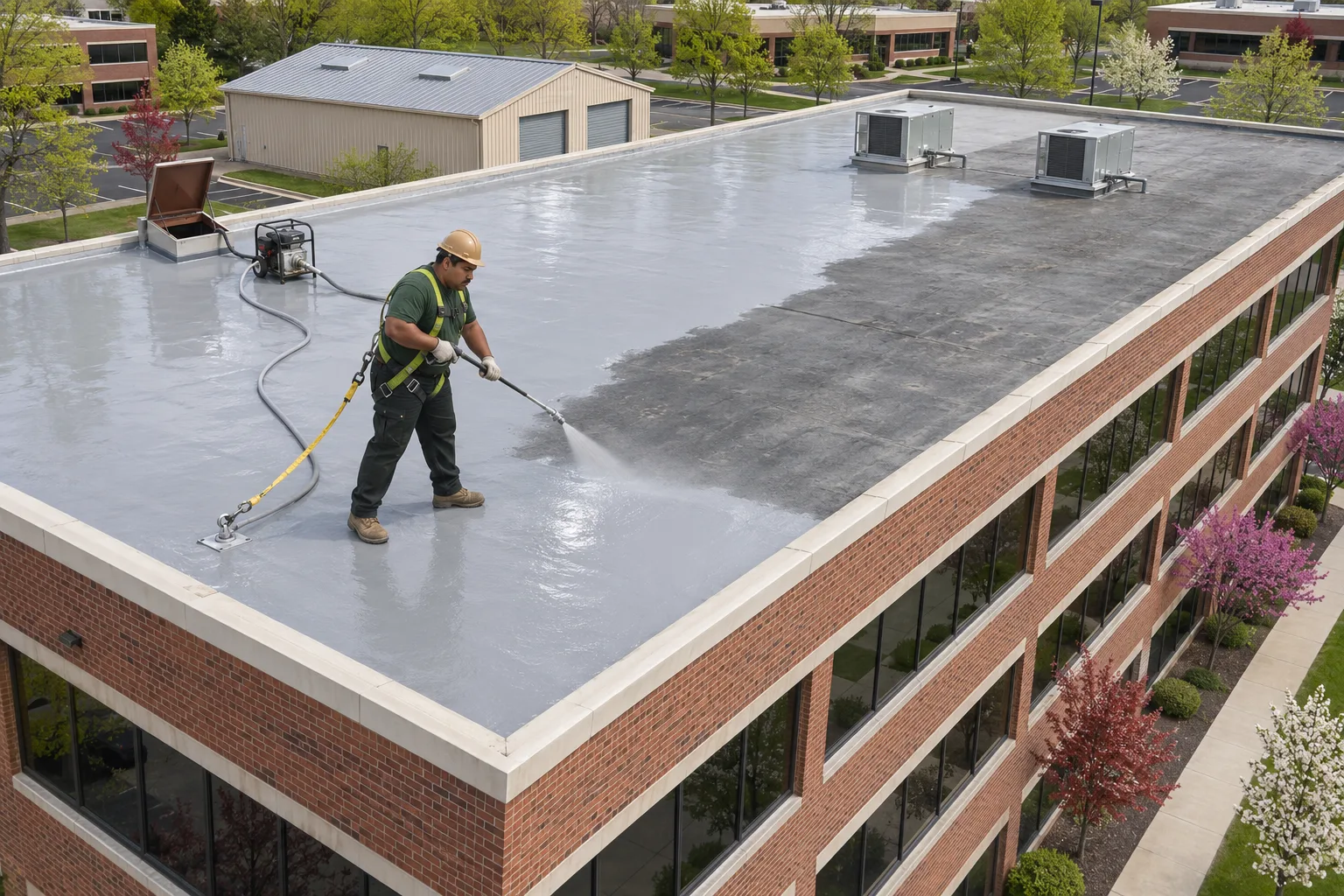
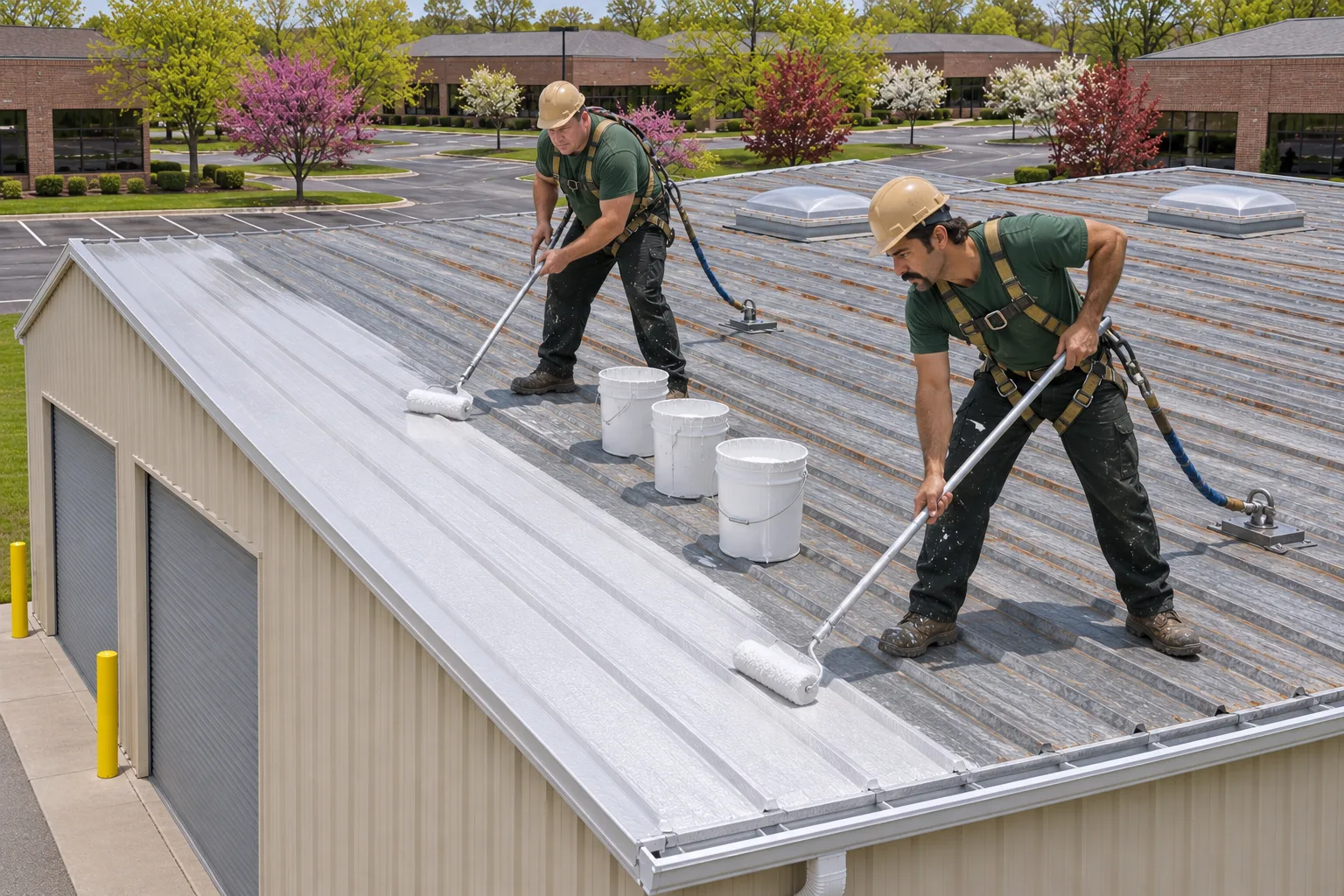
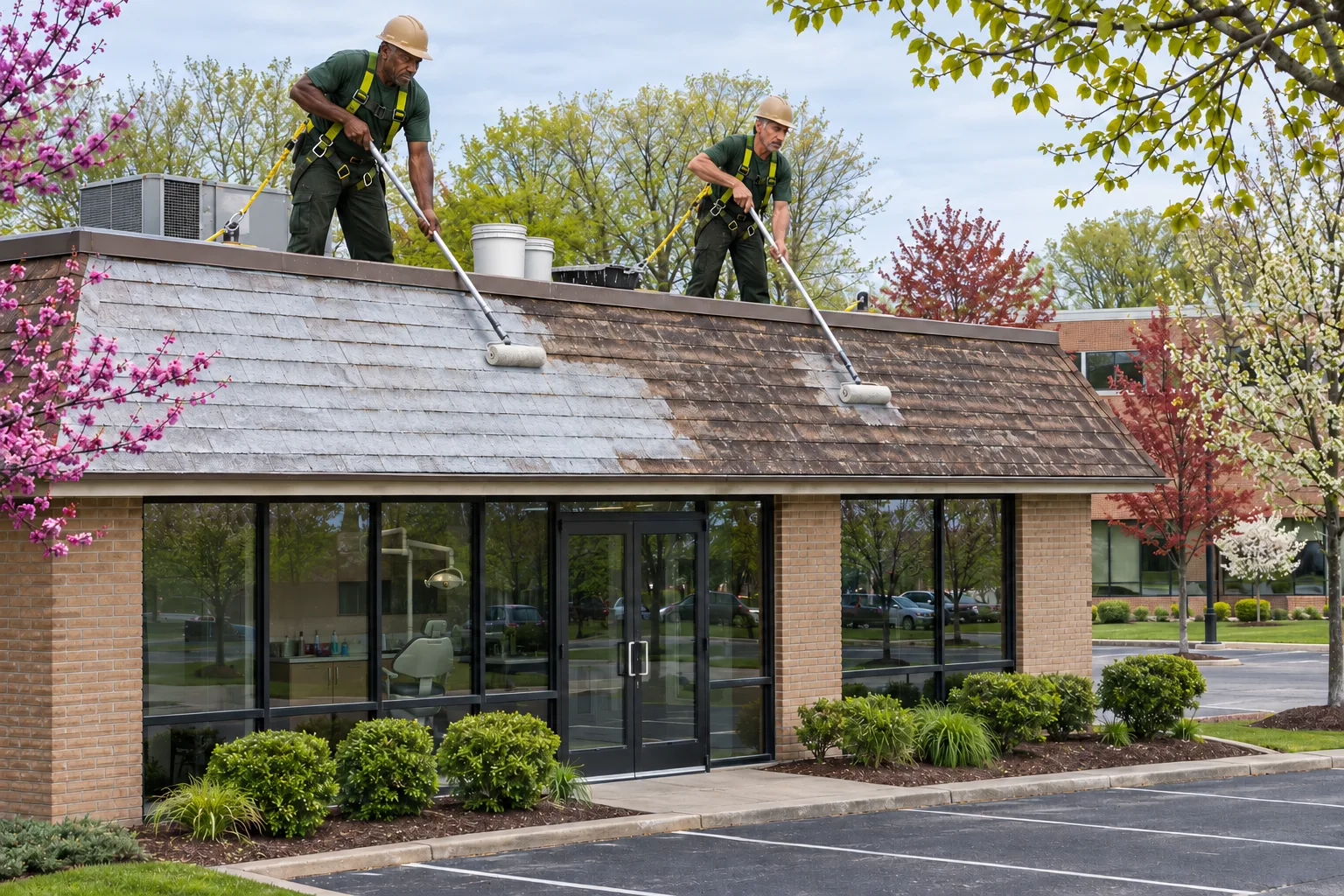
Lifespan, recoating, weather, and trade-offs for foam over a metal or flat roof.
Foam thickness, topcoat condition, and maintenance decide it.
The topcoat shields the foam from sunlight and moisture, so keeping it intact matters most. Repair hail marks and punctures from equipment work promptly, and recoat when the topcoat wears thin.
We clean and inspect the surface, cut out and refill any damaged or wet foam, and apply a fresh topcoat at the specified thickness. Recoating on schedule keeps the foam covered and avoids replacing the whole system later.
On the plus side, foam gives one continuous surface, added insulation, light weight, and the option to build slope. On the minus side, it needs dry weather and careful application, its topcoat needs upkeep, and heavy foot traffic punctures it.
Yes. Foam sticks only to a dry surface, so we spray after the roof has dried from rain or dew and stop when moisture or strong wind returns. Late spring through early fall gives the longest stretches for foam work.
Yes, once the panels are fastened tight and the insulation underneath is dry. The panels stay in place, the foam covers them, and the topcoat protects the foam. Wet insulation has to come out first.
Foam adds insulation on top of the panels, so spaces under a thinly insulated metal roof often stay cooler in summer. How much cooler rests on the foam thickness and the insulation already there.
Send the roof size and a photo of the panel underside from inside. We will price the repairs, foam, and topcoat together.